A in Morse Code: Symbol & Translation
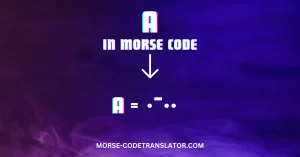
Learning Morse code starts with understanding individual letters. One of the simplest and most important letters to learn is “A”, represented in Morse code as ·− (dot dash). Though it looks simple, this single combination of sounds and symbols opens the door to understanding how the entire Morse system works.
In this guide, you will learn how to write, hear, and practice the letter A in Morse code. You will also discover how it is used in real communication, fun examples to try, and easy techniques to master it. You can check the code for any other letter using the Morse Code Translator tool.
What is the Morse Code for “A”?
In International Morse Code, the letter A is represented as:
A → · −
- The dot (·) is a short signal.
- The dash (−) is a long signal.
When sending Morse by sound or light, this means one quick signal followed by one longer signal.
It is one of the most basic and frequently used letters, which makes it a perfect starting point for beginners. Once you understand how to send and identify “A,” learning other letters becomes much easier.
The Sound and Rhythm of “A” in Morse Code
Morse code is not just about symbols. It is about rhythm. The letter “A” follows a simple beat pattern: short, long.
You can think of it like this:
- Dot (·) = quick tap or short beep
- Dash (−) = longer tap or extended beep
If you were to tap it out on a table or say it aloud, it would sound like:
“di-dah”. This natural rhythm is what helps Morse code operators recognize letters instantly, even at high speed. This single character is the very first of the Morse Code Letters to learn.
How to Write and Send “A” in Morse Code
Morse can be written, flashed, or sounded. Here’s how to do each:
1. Writing “A”
You can write the letter A in Morse code like this:
· −
Use dots and dashes with a space between letters when writing multiple characters. For example:
A B C would be written as · − −··· −· −·
2. Sounding “A”
If you are using sound, such as with a buzzer or Morse practice app:
- Tap or beep once quickly for the dot
- Immediately follow with one long sound for the dash
The rhythm should always be steady, with a small pause between letters.
3. Flashing “A”
With light signals (like a flashlight):
- Flash once quickly for the dot
- Keep the light on longer for the dash
This was a common way to send Morse signals between ships, aircraft, or scouts.
Why “A” is Important in Morse Code
The letter A plays an important role in Morse learning and communication.
- It combines both core signals (dot and dash).
This makes it a perfect example of how dots and dashes work together. - It appears frequently in English words, which helps learners practice real communication.
- It helps build speed and timing because it mixes short and long signals.
In training, instructors often start with “E” (·), “T” (−), and then “A” (· −) since it introduces the first combination of both elements. All characters, including ‘A’, are documented within the full Morse Code Alphabets.
Visual Representation of “A”
Here’s a simple way to visualize the letter “A” in Morse code:
|
Character |
Morse Code |
Audio Pattern |
Timing |
|
A |
· − |
di-dah |
short, long |
Visualization helps you remember the pattern easily. Many learners imagine a short blink followed by a long blink or a quick tap followed by a longer one. The rhythm of this letter is a perfect example of how does Morse Code work regarding dot/dash timing.
Examples of “A” in Words
Once you know “A,” you will start recognizing it inside words quickly. Try translating the following examples:
Try typing these into Our Morse Code Translator Tool to hear how they sound. Listening to entire words will help you develop natural fluency.
Practice Tips to Master “A” in Morse Code
Learning Morse code is much like learning a musical instrument! It’s all about rhythm, repetition, and recognition. The letter “A” (· −) may look simple, but mastering it helps you build the foundation for decoding and sending complex messages later.
Below are expert-approved techniques to help you master “A” in Morse code efficiently and confidently. Once mastered, this letter can be combined with others to form Morse Code Words.
1. Start with the Basics
Before jumping into combinations, spend some time understanding the difference between dots (·) and dashes (−).
Each symbol represents a specific sound length, a dot is one unit, and a dash is three units long.
For quick reference, explore our Morse Code Alphabet Chart to see how “A” connects with other letters visually and rhythmically.
Try repeating the sound of a single dot (“di”) and dash (“dah”) before combining them into “di-dah” — that’s the sound of “A.”
2. Use Audio and Visual Learning Together
Combine visual learning (seeing the pattern “· −”) with audio learning (hearing the “di-dah” sound). This approach trains both your eyes and ears to recognize “A” naturally.
You can play and practice the “A” sound directly using our Translator Tool, which converts text to Morse code sound.
This multisensory method helps improve recall speed and strengthens signal recognition! A skill essential for both hobbyists and radio operators.
3. Practice Daily
Like any language, repetition is the secret. Spend just 5 minutes daily practicing letters such as A (· −), E (·), and T (−).
Within a week, you’ll start identifying these characters instantly when you hear or see them.
Fun Fact: “A” Was One of the First Letters Sent in Morse
When Samuel Morse and Alfred Vail first tested the telegraph system in the 1840s, the letter “A” was among the first transmitted signals. Its simple pattern (dot-dash) made it ideal for testing transmission accuracy.
Early operators often used “A” for test messages because it clearly indicated whether the telegraph line was working correctly.
Learn more about Morse’s invention in our detailed article on When Was Morse Code Invented.
4. Tap the Pattern for Muscle Memory
Muscle memory plays a big role in Morse training. Place your fingers on a flat surface and tap once for a dot and hold slightly longer for a dash.
Repeat “· −” several times rhythmically:
Tap (short) – Tap (long)
Over time, your brain will automatically associate this rhythm with the letter “A.”
For added practice, use the tap-to-send feature on our Online Morse Code Practice Tool.
5. Flash the Light
Visual learners love this technique! Turn on your phone flashlight and send the “A” pattern:
- Short flash for dot (·)
- Long flash for dash (−)
You can practice with a partner or in a dim room for better focus.
This activity not only improves timing accuracy but also lets you experience Morse like real telegraph operators who used light signaling during naval and aviation communication.
Using “A” in Real Morse Communication
In real Morse code operations, “A” frequently appears in prosigns (shortened signal codes used by telegraphers).
|
Prosign |
Meaning |
Morse Code |
|
AR |
End of message |
· − · − · |
|
AS |
Wait |
· − · · · |
|
AA |
New line / separation |
· − · − |
Understanding “A” helps you read and interpret these prosigns effectively during radio transmissions or emergency communication. Many guides on how to learn Morse Code start with this character.
Practice Activity: Sending “A” in Short Phrases
Try sending these simple phrases using “A.” This helps you understand spacing and rhythm in real-world Morse writing.
|
Phrase |
Morse Code |
|
A signal |
· − ··· ·· −. −. .− .−·· |
|
A message |
· − −− · ··· ··· ·− −. · |
|
A test |
· − − · ··· − |
Copy these into our Morse Code Translator to listen and compare your version to the correct rhythm.
Common Mistakes to Avoid When Learning “A”
Even a simple pattern like “· −” can lead to errors if you’re not consistent. Here are common mistakes beginners make:
- Mixing dot and dash lengths: Dashes must be three times longer than dots.
- Rushing signals: Maintain a clear gap between letters.
- Skipping daily practice: Consistency helps your brain retain rhythm.
- Ignoring audio practice: Remember, Morse is a sound-based system.
How to Teach “A” to Beginners
If you’re helping someone new to Morse code, “A” is the perfect starting point.
Here’s a simple step-by-step teaching guide:
- Write “A” and its Morse pattern (· −).
- Say “dot dash” aloud while pointing to each symbol.
- Play the audio of “A” using the Morse Translator Audio Tool.
- Tap the pattern together on a table.
- Mix “A” with letters like E (·) and T (−) for recognition tests.
This interactive approach strengthens both visual recognition and muscle memory.
Fun Challenge
Once you’re confident, try creating short words that include multiple A’s.
For example, the word “ARABIA” in Morse code is:
- − · − · − · − · · · · · −
You can send this using your flashlight or tapping rhythm.
It’s a fun way to test your skills and practice word spacing.
Quick Reference: The Morse Code for “A”
|
Character |
Code |
Sound |
Timing |
|
A |
· − |
di-dah |
short then long |
Memorize this rhythm, short, then long, and you’ll never forget the letter “A.”
For full letter patterns, visit our Complete Morse Code Alphabet Chart, where you can learn and listen to each letter in both sound and light formats.
How to Recognize “A” by Ear
Listening practice is essential when learning Morse code. The more you listen, the faster your brain will associate sound patterns with letters. To recognize “A” by ear, remember its rhythm: short, long.
If you hear a quick beep followed by a longer beep, that is the letter “A.” Here are a few ways to practice:
- Use online Morse trainers or apps.
- Listen to the recorded audio of Morse code alphabets.
- Try to identify the “A” sound within longer messages.
Over time, your brain will automatically detect it, even at faster sp
Frequently Asked Questions
What is the Morse code for the letter “A”?
The Morse code for the letter A is · − (dot dash). It’s pronounced “di-dah.” The short dot comes first, followed by a longer dash.
How do you remember “A” in Morse code easily?
A simple trick is to say it like music, short then long. Think of it as a quick beep followed by a longer beep (di-dah). Repeating it rhythmically while tapping or saying it aloud helps lock it in your memory.
How do I type “A” in Morse code using a keyboard?
You can type “A” in Morse code by using “.” (dot) and “-” (dash).
Example: A = .-.
What sound does “A” make in Morse code?
The sound pattern of “A” is “di-dah”, where “di” represents the short dot and “dah” represents the long dash. You can listen to this rhythm on our Morse Audio Player or through the Morse Code Translator.
Why is learning “A” in Morse code important?
The letter “A” is a foundation symbol in Morse code learning. Its combination of a dot and dash teaches you timing, rhythm, and spacing, which are essential for understanding more complex letters and prosigns later.
Was “A” really one of the first Morse code letters sent?
Yes! During early telegraph tests by Samuel Morse and Alfred Vail, “A” was one of the first letters ever transmitted because its simple pattern made it perfect for testing signal strength and timing.