How to Signal Help in Morse Code
Communication is one of humanity’s greatest strengths. Even before the rise of smartphones and the internet, people found creative ways to share information across great distances. One of the most fascinating and enduring systems is Morse code, a method of sending messages using only two symbols: the dot and the dash.
Even today, Morse code remains useful in survival, aviation, and amateur radio. It is simple, powerful, and universal. Among all Morse code phrases, one of the most essential to know is HELP. Knowing how to send “help” in Morse code could make the difference between being heard and being lost in silence.
This detailed guide will explain everything about help in Morse code: its exact pattern, how to send it with light or sound, how it differs from SOS Morse code, and how to learn Morse code efficiently using modern tools like a Morse code translator.
Understanding “Help” in Morse Code
Letter-by-Letter Breakdown
To write “HELP” using Morse code letters, each character must be broken down into dots and dashes:
Letter | Morse Code | Sound Pattern |
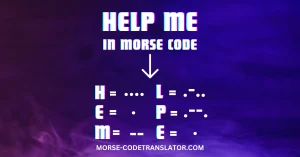
H | …. | dit dit dit dit |
E | . | dit |
L | .-.. | dit dah dit dit |
P | .–. | dit dah dah dit |
When combined, “HELP” is written as:
…. . .-.. .–.
This represents thirteen distinct signals.
If you say it aloud, it follows this pattern:
“dit dit dit dit, dit, di dah di dit, di dah dah dit.”
You can try this by using a flashlight or tapping rhythmically on a surface. For a more specific distress call, you can learn the translation for Help Me in Morse Code.
Why “Help” Is a Great Starting Word
Learning “HELP” is one of the easiest and most practical ways to begin understanding Morse code. It contains a mix of short and long signals, helping you practice rhythm and timing. Once you can confidently send and recognize this pattern, you can move on to more complex morse code words and phrases. Sending this message clearly depends on effective use of the Morse Code Key.
Try It with a Morse Code Translator
A Morse code translator is an online or digital tool that instantly converts text to Morse code. By typing “HELP,” you can see the exact dot-and-dash representation and even listen to how it sounds.
This tool is perfect for beginners who want to visualize and memorize Morse code. It can also translate the reverse way, converting dots and dashes back into regular text, helping you test your decoding skills.
What Is Morse Code?
Morse code was created in the early 1830s by Samuel Morse and Alfred Vail as part of their telegraph invention. The telegraph used electrical pulses sent through wires to carry messages across long distances. Every pulse represented a short or long click that could be heard and decoded by trained operators.
This new system revolutionized communication. For the first time, messages could be sent instantly instead of taking days or weeks. Over time, the system evolved into international Morse code, a standardized version still used globally today.
The effectiveness of Morse code lies in its rhythm and spacing.
- A dot lasts for one time unit.
- A dash lasts for three time units.
- The pause between parts of the same letter is one unit.
- The pause between letters is three units.
- The pause between words is seven units.
This clear timing allows Morse code to be recognized easily even through static, noise, or faint light. It is flexible and works in almost any condition.
The Basics of Morse Code
Morse code is a symbolic system where each letter, number, or symbol is represented by a series of dots and dashes.
- A dot represents a short signal, also known as a “dit.”
- A dash represents a longer signal, also known as a “dah.”
By combining these, we can represent the entire Morse code alphabet from A to Z, as well as Morse code numbers from 0 to 9.
Here are a few examples:
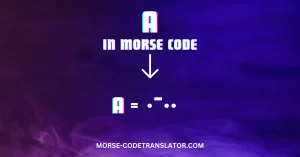
- A = .-
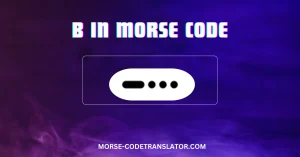
- B = -…
- C = -.-.
- H = ….
- P = .–.
- S = …
- O = —
Each pattern can be transmitted through sound, light, movement, or even vibrations.
HELP vs SOS: Which One to Use
Understanding SOS Morse Code
The SOS Morse code is written as … — … and has become the international distress signal. Each sequence of three dots, three dashes, and three dots forms a continuous and unmistakable call for help.
SOS does not actually stand for “save our souls” or “save our ship.” These phrases were added later for easy memory. The real reason SOS was chosen is because it is simple, symmetrical, and easy to transmit repeatedly.
When to Use HELP Instead
Although SOS is universal, there are times when using “HELP” can make sense. For example:
- You want to communicate with someone nearby who understands Morse code.
- You are learning how to learn Morse code and want to practice forming words.
- You are using Morse for creative or educational projects like art, jewelry, or games.
How to Send “HELP” in Morse Code
Using Sound
Sound is the most common way to send Morse code. You can tap, knock, whistle, or use a beeping tone.
- A short sound equals a dot.
- A longer sound equals a dash.
- Pause slightly between letters so the receiver can separate them.
Example rhythm for “HELP”:
Tap tap tap tap (pause) tap (pause) tap hold tap tap (pause) tap hold hold tap.
You can try this using a simple tapping surface like a table or metal object.
Using Light
A flashlight, phone torch, or mirror reflection can be used to send Morse signals visually.
- A short flash represents a dot.
- A longer flash represents a dash.
- A pause separates each letter.
This method works well at night or across long distances. Hikers, campers, and sailors often use it for signaling when they cannot speak or shout.
Using Movement or Writing
You can also draw dots and dashes in sand, snow, or on paper. If you are unable to use your voice or light, you can blink your eyes, wave your hands, or even tap your foot to send signals.
In visual form, “HELP” looks like this:
…. . .-.. .–.
Repeat it several times to make sure it is noticed.
Using a Morse Code Key
A morse code key is a device used to send precise signals in telegraph or radio communication. It allows you to press a switch to create short and long electrical pulses. This tool is still used by amateur radio enthusiasts and Morse learners.
Digital keys connected to apps can help you practice at your own pace and record your signal accuracy.
Practical Uses of Morse Code
In Survival Situations
Morse code has saved countless lives throughout history. People stranded on islands, lost in the mountains, or trapped underground have used Morse to attract rescuers. Even when radios fail, the human brain can detect rhythmic signals like help in Morse code through light or sound.
For example, flashing a flashlight three times for a dot and holding it longer for a dash can be seen from far away, especially in the dark.
In Creativity and Design
Morse code has also become a part of art, fashion, and music. Designers use it to hide secret messages in jewelry, clothing, and tattoos. Musicians incorporate Morse patterns into songs to symbolize messages of hope, love, or mystery.
Learning morse code words like “LOVE,” “HOPE,” or “HELP” allows you to create subtle, meaningful designs that carry personal significance.
In Technology and Accessibility
Morse code is now used in accessibility tools for people with physical disabilities. Some devices allow users to type or speak by sending Morse signals with small switches or eye blinks. Tech companies like Google have even developed keyboard settings that let people type with international Morse code inputs.
This shows that Morse is not just a relic of history. It continues to evolve and empower new forms of communication.
How to Learn Morse Code Effectively
Learning Morse code might look complicated at first, but it becomes fun once you understand the rhythm.
Here is a step-by-step approach:
Start with the basics
Learn the morse code alphabet and focus on simple letters like E (.) and T (-).
Practice small words
Begin with “HI,” “HELP,” or “SOS.” These are easy and repetitive.
Use a Morse code translator
Type your name or short messages to see their Morse equivalents.
Test yourself
Write down random letters and try converting them to Morse without looking.
Listen to patterns
Play Morse sounds and repeat them to develop a natural sense of timing.
Add numbers and punctuation
Once you master letters, learn morse code numbers like 1 (.—-) or 9 (—-.).
Practice regularly
Consistency is key. Ten minutes a day can make a big difference.
You can also use mobile apps or websites with built-in audio feedback to make learning interactive.
Common Mistakes Beginners Make
Sending too quickly
Always focus on accuracy before speed.
Forgetting pauses
Proper spacing makes your message readable.
Confusing dots and dashes
A dot is short, a dash is three times longer.
Ignoring rhythm
Morse code is musical in nature. Keeping a steady beat helps.
Avoiding these mistakes will make your communication clearer and more confident.
Why Morse Code Still Matters Today
Even in an age dominated by instant messaging and artificial intelligence, Morse code holds value. It is a universal backup for communication when technology fails. It can be used silently, visually, or through vibration. It is also a mental exercise that improves focus, timing, and memory. Many people find it relaxing, similar to learning a musical instrument or a new language. By understanding Morse, you gain access to a piece of history with real-world applications today.
Frequently Asked Questions
What is “HELP” in Morse code
“HELP” in Morse code is …. . .-.. .–.
How do I practice sending “HELP”
You can practice by using a flashlight, tapping sounds, or our morse code translator that shows you how the signals look and sound.
What is the difference between “HELP” and “SOS”
“SOS” is the official emergency signal used worldwide. “HELP” is useful for smaller-scale communication or practice.
Can I use Morse code on my phone
Yes. There are many apps and online tools that let you send or translate Morse code.
How long does it take to learn Morse code
You can learn simple words like “HELP” or “HI” in one day. Mastering the full morse code alphabet a to z takes a few weeks of practice.
Is Morse code still taught
Yes. It is still part of military, aviation, and amateur radio training.