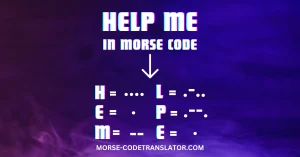
Morse

Morse Code Alphabet (A to Z) Translation

Morse code is only a method of converting letters and numbers into dashes (—) and dots (•), which are short and long signals.
Created for telegraph machines in the 1830s, it swiftly gained popularity as one of the most significant communication methods in the world, particularly for use in ships, aeroplanes, and the military.

Because it may be transmitted by sound, light, or even simple taps when no other means is effective, the Morse code alphabet A to Z is still valid today. The whole Morse alphabet chart and guidance on how to learn and apply it can be found in this guide.

Morse Code Alphabets

What is the Morse Code Alphabet? Language of Dots and Dashes

According to the basic definition, the Morse Code alphabet is a symbolic representation where each letter and character is represented by a series of short and long signals, also referred to as dots (•) and dashes (—).

Morse code is intended to be delivered in simple and universal patterns, in contrast to standard English letters that depend on speech or writing. Since these signals can be conveyed by sound, light, or visual cues, the alphabet is highly adaptable and useful for communication in situations when traditional methods aren’t possible. Before starting, you should understand how Morse Code works fundamentally.

Understanding How Morse Code Alphabet A to Z Translates Letters into Signals

It is based on a simple but powerful concept: each letter of the alphabet has a unique sequence of these signals, allowing messages to be sent and received. This is also possible without speech, electricity, or visual contact.

At its core, the system follows three key timing rules:

  1. Dot (•) — represents a short signal or sound (one unit).
  2. Dash (—) — represents a longer signal (three units).
  3. Spaces — define separation:
  • The gap between dots and dashes in a single letter is one unit.
  • The gap between letters is three units.

Even when sent in noisy or low-visibility environments, this structure guarantees that every Morse code message is clear and rhythmic.

For example:

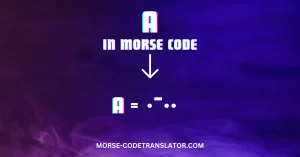
  • The letter A is written as • — (short-long).
  • The letter B becomes — • • • (long-short-short-short).
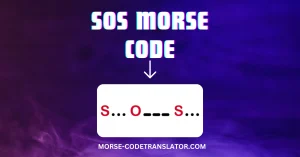
  • The universal distress signal SOS is represented as • • • — — — • • •, sent continuously without spaces between the letters.

This timing-based system was beneficial in early telegraphy, military signalling, and maritime safety since it enables a wide range of communication methods, including light flashes, radio signals, sound (beeps or tones), and even taps on a surface. The best way to practice the skills you learn here is by using the Morse Code Translator tool.

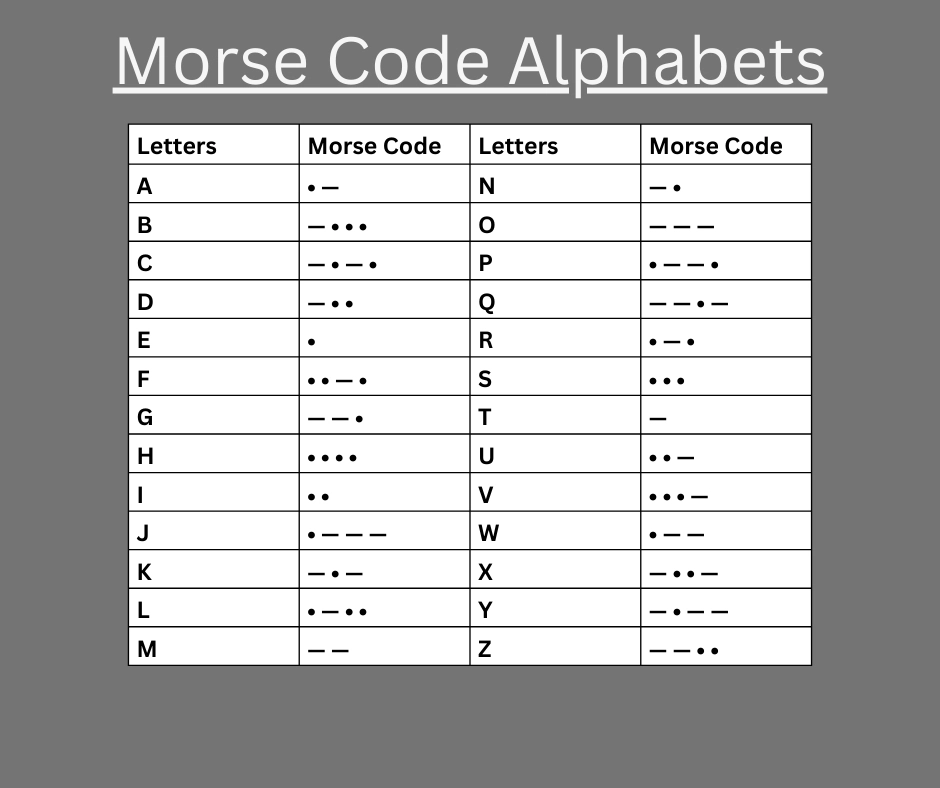
Morse Code Alphabet Chart

This is where all 26 letters in Morse code start, each reduced into a rhythm of dots and dashes that redefined long-distance communication.

Morse Code Alphabet Chart

How to Learn Morse Code Alphabet A to Z Step by Step?

At first, learning the Morse Code Alphabet A to Z may seem complicated, but it becomes easy if you take a methodical, planned approach. Beginning with the basic concepts, developing rhythm recognition, and practising regularly with both visual and auditory techniques are essential. You might also find motivation by reading about the history and when was Morse Code invented.

1: Start with the Simplest Letters

To start, memorise the letters that require the fewest signals, including N (— •), T (—), A (• —), and E (•). These are easy to learn and serve as the basis for understanding Morse code timing and spacing. You can proceed to somewhat longer patterns like S (• • •), O (— — —), and R (• — •) once you feel confident in being able to recognise these by sight or sound.

2: Learn by Groups, Not Alphabetical Order

Instead of memorising Morse code alphabetically, focus on groups with similar patterns. For example:
♦ Single signal letters: E (•), T (—)
♦ Two-signal letters: A (• —), I (• •), M (— —), N (— •)
♦ Three-signal letters: S (• • •), U (• • —), D (— • •), G (— — •)
Grouping helps your brain recognise patterns faster, just like learning words in families.

3: Use Digital Tools for Daily Practice

Free online resources that translate text into Morse code and play it back in Audio format are available to students today. With the help of our Morse Code tool, you can write any word or sentence and see the translation in Morse code along with the appropriate dot and dash rhythm right away. This interactive tool makes studying Morse code enjoyable and effective for both novices and experts by allowing users to practice decoding, enhance timing, and quickly recall patterns.

4: Translate Short Words and Phrases

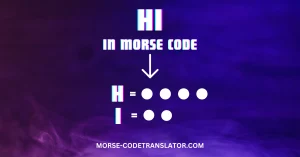
After mastering individual letters, begin creating basic words such as SOS (• • • — — — • • •) or HI (• • • • • •). As your confidence increases, gradually transition to whole sentences. It’s essential to write, tap, or play them every day.

5: Practice with Rhythm and Sound

Morse code is rhythmic as well as visual. Use programs such as CWops Academy or Morse Code Ninja, or use online Morse code sound generators to hear real tones. To match the sound, try tapping your palm or a pencil in time. As a result, timed “muscle memory” is developed.

6: Test and Improve Regularly

Challenge yourself with timed decoding exercises or quiz apps. Tracking your progress helps reinforce memory and improve recognition speed.

Pro Tip:
Avoid rote memorisation! Focus on hearing the rhythm. Morse code is more like music than language; every letter has its own beat.

Smart Tricks to Remember the Morse Code Alphabet Faster

Learning the Morse Code Alphabet A to Z doesn’t have to be difficult or boring. The secret lies in using smart association techniques instead of rote memorization. When you link each Morse code pattern with a sound, rhythm, or visual cue, your brain remembers it much faster and for longer. Below are practical and fun strategies that can help you master Morse code in less time.

1. Use Word Associations and Mnemonics

Give each Morse letter a short phrase that matches its rhythm of dots and dashes. For example:

  • C (— • — •) → Think of “Come Clean,” matching the long-short-long-short beat.
  • F (• • — •) → “Find Four,” short-short-long-short.
  • L (• — • •) → “Learn Letters,” short-long-short-short.

This playful method builds natural rhythm recognition and makes memorization more intuitive.

2. Learn Through Sound and Rhythm

Morse code is more about rhythm than visuals. Try listening to the beeps or tapping patterns instead of just reading dots and dashes.

  • A dot (•) is a quick, short sound.
  • A dash (—) is a longer, steady tone.
    Tap out each letter using your fingers, a pen, or even table knocks. For example, S (• • •) feels like three fast taps! Simple and instantly recognizable.

Many learners find that treating Morse code like music makes learning faster and more enjoyable.

3. Visualize the Patterns

Turn Morse code into visual images. For instance:

  • A (• —) looks like a small spark followed by a flash — imagine it as “a light turning on.”
  • O (— — —) can be seen as three long beams! “an open path.”

Visualization strengthens both memory and recognition speed by connecting shapes with sounds.

4. Group Similar Letters Together

Instead of learning all 26 letters randomly, organize them by pattern length or similarity.

  • Single signal letters: E (•), T (—)
  • Two signals: A (• —), I (• •), M (— —), N (— •)
  • Three or more signals: S (• • •), H (• • • •), O (— — —)

This reduces confusion and helps your brain detect rhythm families, much like learning musical scales or word groups.

5. Practice with Flash and Tap Games on Our Site

Turn Morse code into visual images. For instance:

  • A (• —) looks like a small spark followed by a flash — imagine it as “a light turning on.”
  • O (— — —) can be seen as three long beams! “an open path.”

Visualization strengthens both memory and recognition speed by connecting shapes with sounds.

6. Sing the Codes to a Beat

Music is one of the most powerful memory aids. Assign a rhythm or simple tune to each Morse letter! Say the dots and dashes aloud in a musical pattern.
For instance:

  • B (— • • •) can be sung as “long-short-short-short.”
  • U (• • —) might fit a rhythm like “tap-tap-long.”

When you connect learning with sound and fun repetition, it sticks naturally.

7. Revisit and Test Yourself Regularly

Repetition is key! But smart repetition works best. Spend just 10–15 minutes daily reviewing 4–5 letters, then test yourself by decoding simple words. Over time, you’ll notice you can “hear” Morse in your head without consciously thinking about dots and dashes.

Real-World Uses of the Morse Code Alphabet A to Z in Modern Communication

Even in the age of smartphones, satellites, and instant messaging, the Morse code alphabet A to Z continues to serve as a timeless communication tool. Its simplicity, versatility, and ability to transmit messages through light, sound, or touch make it valuable in specific modern applications.

1. Aviation and Aeronautical Navigation

Pilots and air traffic controllers still rely on Morse code to identify navigational aids like VOR (VHF Omnidirectional Range) stations. Each station has a unique three-letter Morse identifier that helps pilots confirm they are tuned to the correct signal.
The VOR station in Los Angeles transmits the identifier “LAX” as ·–·· ·– –··– in Morse. When a pilot hears this tone sequence, they know the signal is coming from the Los Angeles VOR station! Ensuring accurate navigation even if visual instruments fail.

2. Maritime Communication and Distress Signaling

Morse code remains a backup system for ships and submarines. Sailors can communicate across long distances or signal distress using lights, radio beeps, or even tapping on hulls.
In 1997, during a sailing race, the yacht Drumbeat lost all its electronic systems. The crew used a flashlight to send an SOS (· · · — — — · · ·) signal to a nearby ship, which successfully rescued them. This real-world use highlights Morse code’s life-saving potential even in the modern era.

3. Amateur Radio (HAM) Operators

HAM radio enthusiasts around the world continue to use Morse code (known as “CW” or continuous wave) because it can travel farther than voice transmissions under poor signal conditions. It’s also a skill-based form of communication that connects people across continents.
During the 2010 Haiti earthquake, when phone lines and networks were destroyed, amateur radio operators used Morse code to relay rescue messages and coordinate aid! Proving its reliability when all else failed.

4. Emergency and Survival Scenarios

In critical situations where speech or electronic devices can’t be used, Morse code offers a simple and universal way to communicate.
In 1965, a captured U.S. Navy pilot, Jeremiah Denton, blinked the word “TORTURE” in Morse code with his eyes during a televised interview. This silent message revealed his mistreatment to U.S. authorities! A historic example of Morse code as a tool of courage and survival.

In essence, the Morse code alphabet isn’t just a relic of the past! It’s a quiet survivor in the digital age. From pilots confirming their flight paths to sailors signaling distress or radio operators saving lives, Morse code proves that even the simplest dots and dashes can carry powerful messages across time, distance, and technology.

Fun and Interactive Ways to Practice the Morse Code Alphabet A to Z

Who says learning Morse code has to be boring? Forget endless lists, this can actually turn into an exciting game of dots and dashes! With a few clever tricks and hands-on challenges, you can turn each practice session into a mini-adventure that keeps your brain sharp, your curiosity alive, and every symbol easy to remember.

1. Flashlight Communication Challenge

Grab a friend and use a flashlight to send short and long signals (dots and dashes). Take turns creating secret messages! It’s a great way to build speed while testing your decoding skills. You’ll be amazed how quickly you start recognizing words through light patterns.

2. Morse Code Tap Battle

Instead of saying the letters, tap them! One person taps out a word on a table while the other tries to guess it. This activity not only improves your listening and rhythm but also helps train your muscle memory for quick recall.

3. Digital Morse Code Simulators

Many free apps and websites let you type, hear, or even visualize Morse signals. You can race against time, compete for accuracy, or translate live sound into text. This modern twist blends learning with a bit of tech excitement.

4. Create Your Own Morse Challenge

Write short phrases or your name in Morse and decorate them as coded art on paper or digital posters. This adds a visual and creative element to the learning process, making Morse code feel more personal and expressive.

Why the Morse Code Alphabet A to Z Still Matters in the Digital Era

In a world ruled by smartphones and instant messages, it’s easy to forget that communication once relied on dots and dashes. Yet, the Morse Code Alphabet A to Z still stands as a timeless reminder of human creativity and problem-solving.
What makes it special is its simplicity and power! Just a few short and long signals that can cross oceans, save lives, and share messages when nothing else works. Learning Morse code today isn’t just about nostalgia; it’s about training your brain to think faster, sharper, and more rhythmically.
Think of it as learning a secret language! One that connects you with history’s explorers, aviators, and innovators, while sharpening your focus and memory in the digital age.

Frequently Asked Questions

How to memorize the morse code alphabet?

Start with simple letters like E (•) and T (—), then use word associations, rhythms, or audio practice tools to remember patterns easily.

What is ABC in morse code?

A (• —), B (— • • •), and C (— • — •).

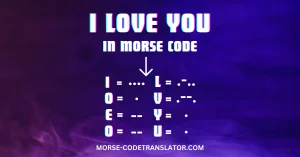
How to write morse code “I Love You”?

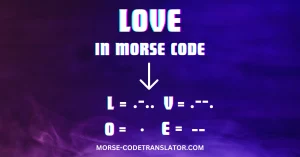
I (• •), L (• — • •), O (— — —), V (• • • —), E (•), Y (— • — —), O (— — —), U (• • —).

What do dots mean in morse code?

Dots represent short signals: quick sounds, flashes, or taps that combine with dashes to form letters and numbers.

How do you say SOS in morse code?

SOS is written as • • • — — — • • •, the universal distress signal.

Related Blogs