Morse

Morse Code Key: The Complete Chart for Decoding Messages

Morse code is a timeless method of communication that uses a series of dots and dashes to represent letters, numbers, and symbols. At the heart of this fascinating system lies the Morse code key, an indispensable device that allows users to transmit messages efficiently and accurately. Whether you are a beginner, an amateur radio enthusiast, or someone curious about history, understanding the Morse code key is essential for mastering this skill.

To make learning and practice easier, you can also use a Morse code translator! A modern digital tool that instantly converts text into Morse code (and vice versa). It’s perfect for beginners who want to visualize and hear what Morse code sounds like before trying it on an actual key. Using both a physical Morse code key and a Morse code translator together helps build confidence in your communication skills.

Morse Code Key

What is a Morse Code Key?

A Morse code key is a mechanical or electronic device used to send Morse code signals. By pressing and releasing the key, the operator generates dots (short signals) and dashes (long signals), which together form letters and words. The simplicity of the device hides its importance! Without a key, sending Morse code would be far less precise and much slower.
Morse code keys come in several forms, including straight keys, paddle keys, and electronic keys, each offering unique advantages for different users. Understanding the key’s operation is vital to understanding how does Morse Code work in practice.

History of the Morse Code Key

The history of the Morse code key is deeply intertwined with the development of telegraphy in the 19th century. Samuel Morse and Alfred Vail, the pioneers of Morse code, designed the first telegraph system, which required a device to send coded signals. The original straight key was a simple lever that completed an electrical circuit, producing audible clicks at the receiving end.

Today, modern ham radio enthusiasts use paddle keys with electronic systems that automatically produce dots and dashes. The history of the key dates back to when was Morse Code invented and the earliest telegraph systems.

Types of Morse Code Keys

Just as there are different musical instruments for musicians, Morse code operators have several types of keys! Each is designed to suit various skill levels, comfort preferences, and transmission speeds. Understanding these types helps you choose the right one for your learning style or radio setup. Proper technique for using the key is essential in guides on how to learn Morse Code.

Straight Key

1. Straight Key

The straight key is the most traditional and iconic type of Morse code key. It features a simple lever mounted on a base, which the operator presses down to complete an electrical circuit. Each press produces either a dot (short press) or a dash (long press), depending on how long the key is held down.

Straight keys are ideal for beginners, as they teach the fundamental skills of timing, rhythm, and spacing! The heart of Morse code communication. Operating one gives you a hands-on understanding of how Morse signals are formed.

However, straight keys can be physically demanding during long sessions. Many operators experience a condition known as “glass arm” or “telegrapher’s paralysis”, caused by repetitive hand motion. Despite that, straight keys remain beloved for their simplicity, authenticity, and connection to the golden age of telegraphy. Clear transmission is absolutely critical when sending emergency signals like SOS in Morse Code.

Bug Key (Semi-Automatic Key)

2. Bug Key (Semi-Automatic Key)

The bug key, also called a semi-automatic key, was invented in the early 1900s to increase transmission speed while reducing hand strain. It has a mechanical system that automatically creates a stream of dots when the lever is pushed to one side, while the operator manually forms dashes by pressing the lever in the opposite direction.
This clever design allowed telegraphers to send messages much faster than with a straight key, often up to 40 words per minute. The bug key became the standard for professional telegraph operators in the early 20th century, especially in railroads and military communication.
One fun fact: it’s called a “bug” key because the vibrating mechanism produces a buzzing sound as it generates dots, something that early operators found both charming and distinctive.

Paddle Key (Electronic Keyer)

3. Paddle Key (Electronic Keyer)

The paddle key represents the modern evolution of Morse communication. Instead of relying on mechanical parts, it works in tandem with an electronic keyer, a circuit that automatically times and spaces the dots and dashes.

A single-lever paddle has two sides. Pressing the left paddle sends a series of dots, while pressing the right paddle sends dashes. The timing is handled electronically, enabling precise, consistent signals at higher speeds.

This makes paddle keys a favorite among amateur (ham) radio operators, contesters, and professional communicators who value both speed and accuracy. They also significantly reduce physical fatigue, allowing long operating sessions with minimal effort. The key must produce signals that comply with the International Morse Code standards.

Twin Paddle Keys

4. Twin Paddle Keys

The twin paddle key takes efficiency to the next level by allowing operators to use both paddles at once. When connected to an electronic keyer, it enables a technique called “iambic keying.” By squeezing both paddles simultaneously, the keyer automatically alternates between dots and dashes in perfect rhythm.
This system gives experienced users maximum speed, precision, and control! Perfect for professional Morse code operators or advanced hobbyists who prioritize smooth, rapid transmission. Twin paddle keys are often beautifully engineered, with adjustable tension, contact spacing, and ergonomic design to match an operator’s personal touch.

How a Morse Code Key Works

The operation of a Morse code key is based on a simple but brilliant concept. The completion and interruption of an electrical circuit to send coded signals. Despite its simplicity, this mechanism has remained the foundation of global telecommunication for over a century.

Why Timing and Rhythm Matter

Mastering a Morse code key isn’t just about pressing a button! It’s about developing a sense of timing, rhythm, and consistency. Each dot, dash, and space between them must be carefully timed:

  • The length of a dash is typically three times longer than a dot.

  • The space between symbols (dots and dashes) within a letter equals one dot’s duration.

  • The space between letters equals three dots’ duration.

  • The space between words equals seven dots’ duration.

These small timing rules make Morse code universally readable, no matter who sends it or where it’s received.

The Basic Principle

When you press a Morse code key, you are essentially closing an electrical circuit. This allows an electric current to flow through a connected wire or transmitter. When you release the key, the circuit opens, stopping the current. Each controlled press and release creates a signal that can be heard or seen at the receiving end.

Over time, operators learned to control the duration of each press to represent the building blocks of M orse code:

  • Short press = Dot (·)
  • Long press = Dash (–)

By combining different sequences of dots and dashes, operators could spell out letters, numbers, and even punctuation.

For example:

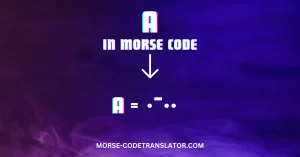
  • The letter A is “· –” (short, long).
  • The letter B is “– · · ·” (long, short, short, short).
closing an electrical circuit

The Transmission Process

Key Activation

When the operator presses the key, the electrical circuit is completed, and a signal (tone, light, or pulse) is transmitted through the line or airwaves.

Signal Transmission

The current travels through a telegraph wire in traditional systems or through radio waves in modern setups.

Signal Reception

At the receiving end, the signal is converted into audible beeps, flashing lights, or visual recordings on paper tape. Skilled operators can instantly translate these signals into letters and words by ear.

Decoding the Message

The receiver interprets the sequence of short and long tones (dots and dashes) according to the Morse code alphabet, recreating the original message.

Practice Makes Perfect

Learning to use a Morse code key takes patience and practice. Beginners often start by listening to recorded tones and then practice tapping them out on a straight key. Over time, as rhythm and accuracy improve, operators transition to faster tools like bug keys or paddle keys.
Consistency, not speed, is the goal for beginners. Once your timing becomes natural, speed will follow automatically.

Why Learning the Morse Code Key is Important

1. Essential for Amateur Radio

Many ham radio operators still rely on Morse code as a dependable means of communication over long distances, especially when voice transmission fails. Using a Morse code key ensures clear and consistent signals even under poor conditions, making it a vital skill in amateur radio.

2. Useful in Emergencies

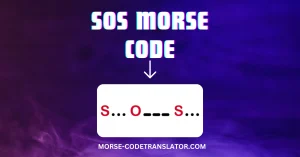
In survival or emergency situations, a Morse code key can be a lifesaver. It allows you to send universal distress signals like SOS quickly and efficiently, even with minimal power or equipment. Its simplicity and reliability make it one of the most effective emergency communication tools.

3. Enhances Brain Function

Learning Morse code with a key enhances hand-eye coordination, memory, and rhythmic precision. It’s a mental workout that improves focus and reaction time while also providing a fun and challenging way to strengthen cognitive skills.

4. Cultural and Historical Appreciation

Operating a Morse code key connects you directly to the rich heritage of global communication. It offers a glimpse into the ingenuity of 19th-century inventors who revolutionized long-distance messaging and laid the foundation for today’s digital communication.

Tips for Using a Morse Code Key Effectively

Start Slowly

Begin by practicing clear and distinct dots and dashes. Gradually increase your speed as you become more comfortable with the timing.

Practice Rhythm

Morse code is built on rhythm. Focus on maintaining evenly spaced signals to improve clarity and accuracy.

Use Audio Feedback

Record or listen to your own transmissions to detect and correct mistakes quickly.

Experiment with Different Keys

Try using straight keys, paddles, and electronic keyers to discover which feels most natural for your style and speed.

Fun Facts About Morse Code Keys

  • The term “bug key” comes from the distinctive buzzing sound it makes when sending dots.
  • Many Morse code hobbyists collect vintage keys from the 1800s, which are now considered valuable historical artifacts.
  • Morse code keys aren’t just tools! They’re often beautifully crafted pieces of art, blending engineering precision with timeless design.

Frequently Asked Questions

What is a Morse code key used for?

It’s a device used to send Morse code signals by creating dots and dashes through short and long presses.

What are the types of Morse code keys?

Main types include straight key, bug key, paddle key, and twin paddle key.

How does a Morse code key work?

It completes and breaks an electrical circuit. A short press sends a dot, and a long press sends a dash.

Can I learn Morse code without a key?

Yes. You can practice using a Morse code translator, mobile apps, or online training tools.

What is the best Morse code key for beginners?

A straight key is simple, affordable, and great for learning rhythm and timing.

Is Morse code still used today?

Yes, it’s still used by ham radio operators, in emergencies, and for training or hobby purposes.

Why is it called a “bug key”?

Because its vibrating mechanism makes a buzzing sound that resembles a bug.

How fast can Morse code be sent?

Beginners send around 10–15 words per minute, while experts reach 40+ words per minute.

Can I make a Morse code key at home?

Yes. You can build one using simple materials like metal strips, screws, and wires.

What does “fist” mean in Morse code?

It’s an operator’s unique rhythm or sending style, like a personal signature.

Why should I learn to use a Morse code key?

It’s fun, improves focus, connects you with history, and helps in emergencies.

Related Blogs