Yes, in Morse Code: A Simple Word With a Powerful Signal
Morse code is a sound, light, and time language. It does not use written letters, and instead, it uses short and long signals to exchange information. Although most people learn Morse code to decipher single letters, others are more concerned with entire words. Yes is one of the most frequently used and popular words.
Decisions, questions, and agreements are confirmed by using the word yes. This little word in Morse code is a rhythmic pattern, which can be transmitted in the form of sound, light, or movement. Knowing how it works will make you appreciate more how Morse code operates in the real-life context, like emergency communication, military communication, and amateur radio communication.
What Does Yes Mean in Morse Code?
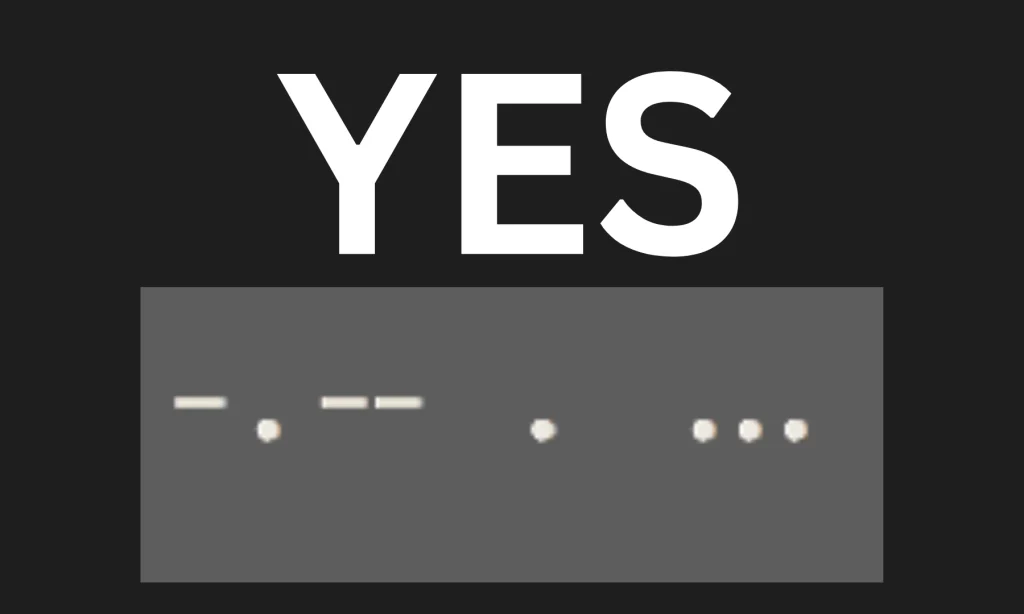
In case you are wondering what yes looks like in Morse code, it looks like this in visual representation:
. – – . . . .
This pattern consists of short and long marks that depict sound or light signals. Although it is easy, proper timing is what renders the message readable. These dots and dashes are frequently printed in military training manuals with spacing guides to enable beginners to practice properly.
What Is Yes in Morse Code?
The question of what yes means in Morse code is usually asked by people who are seeking a clear and straightforward answer.
The three letters make the word yes:
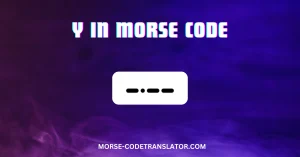
- Y = dash dot dash dash
- E = dot
- S = dot dot dot
The complete pattern of Morse, when combined, is:
– · – – · · · ·
They are separated into different letters by each group, and the pauses between them are small to allow the receiver to comprehend the message well. As an illustration, when communicating via radio, such pauses do not allow yes to pass as one long signal.
How Do You Say Yes in Morse Code Without Speaking?
Others wonder how to say yes in Morse code when you do not have the option of sound.
In non-verbal scenarios, you may employ:
- Flashing light
- Hand movements
- Knocking patterns
- Blinking
Long signals are dashes, and short signals are dots. The message will be understood as long as it is timely. In history, prisoners of war would occasionally tap Morse code on the walls to send simple messages such as yes and no.
Say Yes in Morse Code With a Flashlight
To say yes in Morse code using light, follow this pattern:
For Y:
Long flash
Short flash
Long flash
Long flash
For E:
Short flash
For S:
Short flash
Short flash
Short flash
This technique can be applied at night, when there is a power outage, or when it is not possible to communicate using voice. Campers and hikers usually bring flashlights, which can transmit Morse messages in case of danger.
How to Say Yes in Morse Code Using Sound
A significant number of learners would like to understand how to pronounce yes in Morse code.
In oral Morse, the dots are referred to as dit and the dashes as dah.
So the word “yes” sounds like:
- Y = dah-dit-dah-dah
- E = dit
- S = dit-dit-dit
Spoken smoothly, it is a rhythmic pattern that can be identified within a short period of time by trained listeners. Radio operators rehearse this rhythm with audio recordings to enhance speed and accuracy.
How Do U Say Yes in Morse Code Using Taps?
Another question that is asked is how to say yes in Morse code tapping.
You can tap on:
- A wall
- A table
- A metal surface
- A window
Short tap = dot
Long tap = dash
The word yes can be sent through the maintenance of the rhythm. Morse code tapping is a commonly used secret mode of communication in prison escape movies.
What Is Yes in International Morse Code?
There are those learners who would like to know what yes means in international Morse code.
The International Morse code has a single standard. Yes is spelled in the same manner all over the world:
– · – – · · · ·
This uniformity enables individuals in other nations to interact without language obstacles. As an example, a Japanese sailor and a radio operator in the UK can decode the same Morse message.
What's Yes in Morse Code?
When one wants to know what’s yes in Morse code, the quick answer is:
Y = – · – –
E = ·
S = · · ·
And that is all you need to keep in mind. This is something that many beginners write on flashcards when learning Morse code.
Yes, in International Morse Code and Global Communication
Yes, international Morse code is significant in aviation, radio, and maritime.
The system is standardized, and operators in other regions do not get confused because they all have the same signals. Quick confirmations, such as yes can be used in emergency air traffic situations to avoid dangerous misunderstandings.
Is 2 Yes in Morse Code a Real Term?
Some people search for is 2 yes in Morse code because they see repeated confirmations.
There is no official “2 yes” signal in Morse code. However, repeating “yes” twice is sometimes used informally to show strong agreement, similar to saying “yes, yes” in everyday speech.
Yes and No in Morse Code for Quick Replies
Basic communication can be made by learning yes and no in Morse code.
Yes = – · – – · · · ·
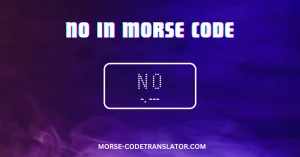
No = – · – – –
These two words allow one to answer questions even when speech is impossible. Soldiers used short Morse replies during World War II to confirm orders without replying.
Why the Letter S Matters in the Word “Yes”
The letter S plays a vital role in the word “yes.”
Its Morse code pattern (three dots) is:
- Easy to send
- Easy to recognize
- Hard to confuse
This makes the ending of “yes” very clear, even in noisy or low-visibility conditions. The same “three dots” pattern is also used in the famous SOS distress signal.
Morse Code and Decision-Making
The word “yes” is often used to:
- Confirm instructions
- Approve actions
- Respond quickly
- Show agreement
In Morse code, short words like “yes” save time and reduce errors. For example, a ship captain might receive a Morse signal asking if the route is safe and reply with a simple “yes.”
How Radio Operators Use “Yes”
In radio communication, operators sometimes use single-letter confirmations instead of whole words.
For example, the letter “C” can mean “correct” or “yes” depending on context. This was especially common during wartime when speed and secrecy were critical.
Morse Code in Emergency Training
In some cases, emergency teams are taught the basics of Morse code in case of failure of modern communication tools.
Simple words such as yes can be known to help in confirming safety, location or instructions in the absence of other systems. Light or sound signals can be applied by rescue teams in disaster areas.
Learning Morse Code Through Words
Many learners focus only on letters, but learning full words like “yes” helps you:
- Understand rhythm
- Improve timing
- Recognize patterns
- Build confidence
Words make Morse code feel more like a real language instead of a chart. Teachers often start with short words like “yes,” “no,” and “ok.”
How Our Morse Code Translator Helps
Our Morse Code Translator makes learning easy and practical.
You can:
- Type “yes.”
- See the Morse pattern
- Play the sound
- Use light signals
- Copy the code
Why Visual Tools Improve Learning
Seeing Morse code in action helps your brain connect:
- Sound
- Timing
- Pattern
- Meaning
Interactive tools turn Morse code into a hands-on experience instead of just memorization. Many online learning platforms now include Morse code simulators.
Why People Still Learn Morse Code
Even in the digital age, people learn Morse code for:
- Hobby radio
- Curiosity
- Education
- Survival skills
- Fun challenges
The word “yes” is often one of the first words they learn because it is simple and valuable.
Morse Code as a Skill
Learning Morse code:
- Improves focus
- Trains listening skills
- Builds patience
- Encourages precision
It is not just a communication tool but also a mental exercise. Some people even use Morse code practice to improve concentration.
For beginners who want step-by-step practice, this article on how to learn Morse code covers signals, timing, and real examples.
Cultural Interest in Morse Code
Morse code appears in:
- Movies
- Video games
- Escape rooms
- Puzzles
- Books
It is often used to create mystery, tension, or secret messages. For example, hidden Morse messages are sometimes used in thriller movies.
Final Thoughts
Yes is a short word, but when it is in Morse code, it is a significant signal composed of rhythm and timing. It demonstrates how simple patterns can be used to convey definite messages without the use of spoken language. By understanding how to send and receive this word, you will be in a better position to understand how Morse code is a complete communication system.
Modern tools and practices make it possible for any person to explore Morse code and enjoy the exclusive manner in which sound, light, and meaning are interconnected.
Frequently Asked Questions
What is the Morse code for “yes”?
“Yes” is written using three letters: Y, E, and S. Each letter has its own dot-and-dash pattern.
Can “yes” be sent using light signals?
Yes, flashing short and long light signals can spell the word clearly.
Is “yes” the same in all Morse code systems?
In International Morse Code, “yes” is written the same way worldwide.
Why is “yes” easy to recognize in Morse code?
The rhythm of the letters is clear and not easily confused with other words.
Can beginners learn “yes” quickly?
Yes, it is one of the easiest words to memorize in Morse code.
Is “yes” used in real communication today?
Radio hobbyists and emergency teams still use simple Morse words like “yes.”
Can I send “yes” without sound?
Yes, tapping or blinking can be used instead of audio signals.
Does “yes” have a special meaning in emergencies?
It often confirms safety, instructions, or approval in silent situations.
Is Morse code still useful today?
Yes, it is used for learning, hobbies, safety training, and fun.
What is the easiest way to practice “yes”?
Using an online Morse Code Translator makes practice fast and simple.