Morse

No in Morse Code: The Complete Guide
to Symbol, Sound, and Survival

Do you ever wonder how people communicate during scary emergencies? Imagine your cell phone battery dies completely. You are stuck in a tricky situation, and you need to answer a simple question from a rescue team. Learning how to send a fast negative answer can actually save your life.

Saying no is incredibly important in everyday life. It sets clear boundaries, and it gives people a fast answer. It is just as important when you use secret radio signals. The word no in Morse code is one of the most famous short messages in history. It is super fast to send, and it is very hard to misunderstand.

We gathered all the best tricks and tips to help you learn this vital word today. You do not need to be a math genius or a radio expert to figure this out. We will break everything down into super-simple steps for you. Grab your flashlight and let us dive right into the fun world of secret codes!

What is the word "NO" in Morse code?

What is the word _NO_ in Morse code

Many beginners search the internet to find this exact answer. They want to know how to spell out simple words before they tackle huge sentences. The answer is actually very simple and easy to remember. If you are struggling to memorize the rhythmic pattern for “No,” follow our complete guide on how to learn Morse code.


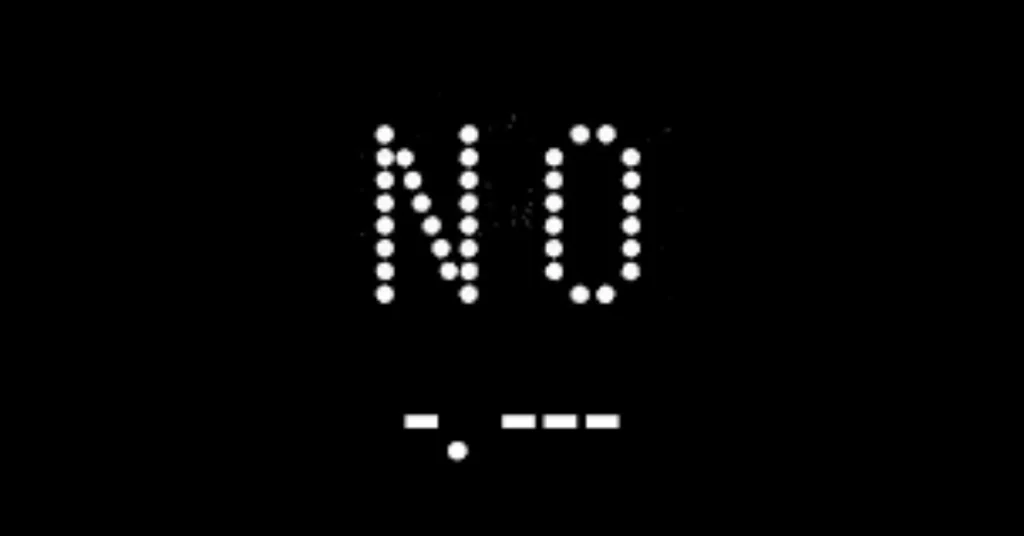
The word “NO” is made of two different letters. You have to combine the letter N and the letter O.

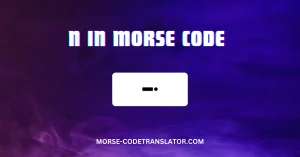
  • N = – ·
  • O = – – –

When you put these two letters together, you get the official code for the word NO.

NO = – · / – – –

You start with a heavy dash and a quick dot. Then you take a tiny pause. Finally, you send three heavy dashes right in a row. It is a very bold and heavy message. It feels exactly like someone stomping their foot on the ground to say they disagree with you.

The Extreme Importance of the Pause

You probably noticed the little slash mark in the middle of the code. That slash is actually the most important part of the entire message! Before trying to flash a negative response with a flashlight, it is important to understand exactly how Morse code works.

If you just smash all the dots and dashes together, the listener will get completely confused. They might think you are trying to send one giant weird letter. You must leave a short pause between the letter N and the letter O.

Radio experts call this the “letter space.” You wait for exactly three seconds between the two letters. This tiny pause tells your friend that the first letter is finished and the second letter is starting. It makes your “no” in Morse code crystal clear.

How to Say NO in Morse Code Out Loud

Radio operators do not say “dash-dot dash-dash-dash” out loud when they talk. That takes way too long to say during a fast emergency. They use special words to mimic the actual sounds of the radio beeps.

  • Dot = “dit”
  • Dash = “dah”

If you want to know how to say no in morse code out loud, it sounds exactly like this:

Dah-dit (pause) Dah-dah-dah

This spoken method is widely used in military training camps and survival schools. It helps your human brain learn the musical rhythm perfectly. You stop looking at a boring picture on a screen, and you start feeling the actual beat. Once you say it out loud a few times, it gets stuck in your head easily.

How to Do NO in Morse Code With Text

People often want to learn how to text secret codes to their best friends. It is a really fun way to send hidden messages during boring classes. The text version looks exactly like this:

– · / – – –

One dash and one dot sit on the left side. Three dashes sit on the right side. This text format is commonly used in online code translators and mobile learning apps. You also see it on educational puzzle websites all the time.

Once you memorize this specific word, you can start practicing it in group chats. If your friend texts you and asks if you want to do homework, you can just reply with – · / – – – instantly!

The standard dash-dot sequence for the word “No” has saved countless lives since when Morse code was invented

How to Write NO in Morse Code Today

If you are just starting, you really need to know how to write this word correctly. People often wonder how they can send this message without buying an expensive radio. You can actually do this in a few different and fun ways right at home.

Writing on a Piece of Paper

Grab a dark pen and a notebook. Write one solid line and one tiny dot. Leave a finger space. Then write three solid lines right in a row.

– · / – – –

Sending With Sound

You can use a loud sports whistle or a car horn. Make one long beep and one short beep. Wait a second. Then make three long beeps.

Beeeeep Beep (pause) Beeeeep Beeeeep Beeeeep

Flashing a Bright Light

Grab a heavy flashlight and point it at a blank wall. Flash the light for three seconds and then for one second. Turn the light off for three seconds. Then flash the light for three seconds three times in a row.

Tapping on a Table

Tap heavily on a wooden table once and then give it one fast light tap. Pause for a moment. Then give the table three heavy, slow taps. Because the sequence for “No” follows the globally recognized International Morse Code standard, it is universally understood. 

 No matter which method you use, the core pattern never changes. The timing is always the secret key to success. A dash must always be three times as long as a single dot. To send a crisp and clear “No” over a radio frequency, you should practice using a traditional Morse code key.

Using the Word NO in Real Survival Situations

Imagine you are totally lost in the dark woods, and your cell phone battery dies. You are freezing cold, and you desperately need a rescue team to find you. You finally see a rescue helicopter flying high above the trees.

The pilot flashes a bright light down at you. They are asking a simple yes or no question. They might be asking if anyone is badly hurt.

You can use a simple mirror to reflect the sun, or you can use your own flashlight. You can spell out exactly what you need quickly. If nobody is hurt, you can flash the word NO into the sky.

The heavy dashes cut through the night sky easily. The fast dot catches the eye of a trained rescue pilot. They know exactly what those flashes mean, and they will understand your situation immediately. This is exactly why survival experts still teach this old method to hikers and campers today.

Why the Word NO Sounds So Dramatic in Movies

People always ask about the secret tapping in cool action movies. Characters are always tapping messages on water pipes to escape evil bad guys.

The word NO is actually perfect for these intense movie scenes. It starts with a heavy bang and finishes with three incredibly slow beats. It sounds super dramatic when a hero taps it out on a metal prison wall in the dark.

It builds instant tension and makes the movie audience feel very nervous. Directors love using this specific rhythm because it sounds like a heartbeat slowing down. This keeps the code totally relevant in modern storytelling today.

The word “No” often appears in internet mysteries, similar to the creepy “we used to live here” in Morse code trend.

Easy Memory Tricks for the Word NO

Easy Memory Tricks for the Word NO

Learning a brand-new alphabet can feel a little overwhelming at first. Your brain might get confused if you just try to memorize random lines and dots from a heavy book. Experts use special memory tricks called mnemonics to fix this problem completely.

A mnemonic is a simple word or phrase that matches the exact rhythm of the code. You can use these clever tricks to remember both letters instantly.

Step 1: Remembering the Letter N

The letter N is one long dash and one short dot (– ·). You can use the word “navy” to remember this beat.

  • Na (Long heavy sound = Dah)

vy (Short quick sound = Dit)

  • Say “NA-vy” out loud right now! The word starts with N and triggers your memory perfectly.

Step 2: Remembering the Letter O

The letter O is three long heavy dashes (– – –). You can use the phrase “Oh my God” to remember this beat.

  • Oh (long, heavy sound = Dah)
  • My (long, heavy sound = Dah)

God (Long heavy sound = Dah)

  • Say “OH MY GOD” slowly. It matches the three heavy dashes flawlessly.

When you put the two tricks together, you get “NA-vy (pause) OH MY GOD.” This goofy phrase helps you lock the entire code into your permanent memory forever.

Why NO is So Easy to Memorize (The Psychology)

A huge question people ask online is how to memorize these codes without forgetting them the next day. The human brain is actually excellent at recognizing musical patterns.

A mix of heavy and short signals forms a very catchy drum beat. This is exactly why the word NO is quickly recognized by the human ear. It is rarely confused if you send it correctly with the right pauses. It is also very easy to repeat over and over again while you practice.

Once you learn the fun memory tricks, it becomes impossible to forget. Your brain connects the funny phrase to the heavy rhythm automatically. You can practice identifying the word “No” hidden within complex audio transmissions like the famous Darius Morse code puzzle.

Teaching Kids How to Send NO in Morse Code

Parents and teachers often search online for the absolute best words to teach their kids first. They want a short word that is fun and easy to grasp quickly.

The word NO is totally ideal for young kids because it feels like a fun drum beat. It is really fun for them to tap loudly on a wooden school desk. It builds their confidence early on and encourages curiosity about history and science.

Children really enjoy learning bouncy rhythmic patterns like this one. They like to practice it with pots and pans in the kitchen while their parents cook dinner. You can play a fun game where you ask them a silly question, and they have to tap the answer back to you. It is a fantastic brain puzzle that keeps them entertained for hours.

Comparing NO With Other Short Words

Practicing full words is the absolute best way to train your growing brain. Here is a simple table showing basic short words that you can practice today. Notice how different they look compared to our main word. “No” is one of the most essential survival terms, but you should also practice forming other common Morse code words.

Secret Word

Morse Code Pattern

Why It Is Good for Practice

NO

– · / – – –

It uses a nice mix of one dot and four dashes.

YES

– · – – / · / · · ·

It is much longer and requires very fast tapping at the end.

HI

· · · · / · ·

It is nothing but super-fast dots.

OK

– – – / – · –

It uses almost entirely heavy dashes.

GO

– – · / – – –

It looks a lot like NO, but the first letter is slightly different.


The Fascinating History Behind the Code

We need to look back at history to truly understand this awesome code. Samuel Morse created this entire system in the 1830s. He wanted a reliable way to send urgent messages across long-distance electrical telegraph wires.

He was a very smart man, and he studied the English language carefully. He gave the absolute shortest codes to the most common letters like E and T. The letters N and O are incredibly common in English. Therefore, he gave them relatively short and simple codes to speed up communication.

Telegraph operators had to memorize these specific patterns to send important news across the whole country. They tapped on brass metal keys for hours every single day at work. The “Dah-dit” rhythm became second nature to them. They could hear it and write it down without even thinking about it.

Using Our Morse Code Translator to Convert NO Instantly

Modern technology has made learning secret codes easier than ever before. You do not have to study dusty old library books anymore. You can now use online tools to convert words instantly on your phone or computer.

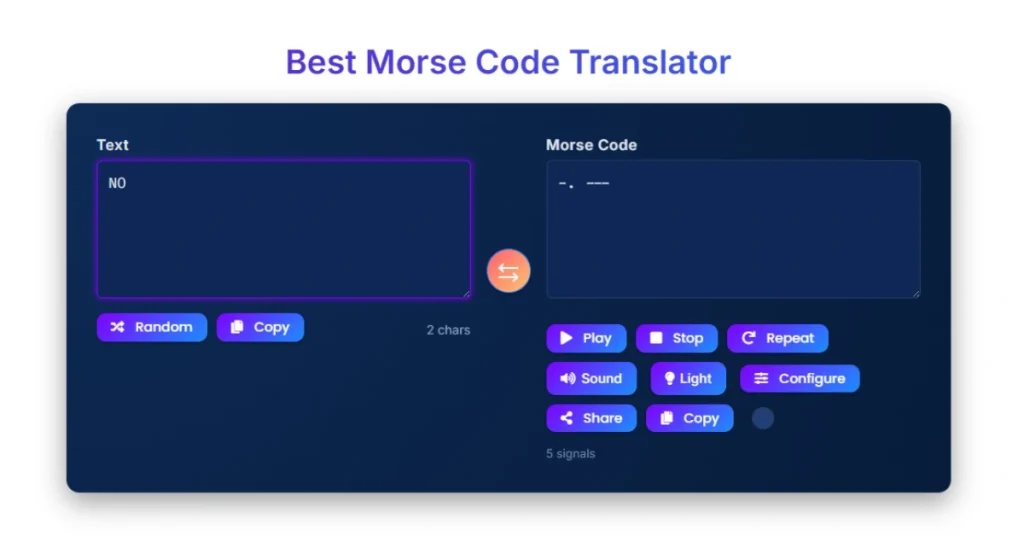
Our handy If you want to hear exactly how the letters N and O sound together, simply paste the word into our free Morse code translator. allows you to type any word and instantly see the correct version. You can play the actual sound pattern through your speakers. You can also flash your screen like a bright light to practice your survival skills.

When you type NO into the text box, the tool automatically converts it to – · / – – – instantly. The interface is clean and very beginner-friendly for everyone. You can copy your secret result and paste it into an email to your friends.

Don't Confuse NO With These Tricky Words

It is very easy to mix up similar letters when you are first learning the alphabet. You need to watch out for these tricky combinations, so you do not make embarrassing mistakes.

The Word GO (– – · / – – –)

The word GO looks a whole lot like NO. The only difference is the very first letter. G is Dah-dah-dit. N is Dah-dit. Make sure you do not add an extra heavy dash at the beginning, or your friend will think you are telling them to leave!

The Word TO (– / – – –)

The word TO is also very similar. The letter “T” is just a single heavy dash. If you forget to tap the quick dot for your N you will accidentally send the word TO instead.

The Letter C (– · – ·)

If you forget to pause between your letters, you might send a completely different signal. If you tap Dah-dit-dah-dit without stopping it sounds exactly like the letter C. Always remember your three-second pause rule!

How Fast Can You Actually Send It?

Professional radio operators can send these messages incredibly fast. They practice for years to build up their wrist muscles and their brain speed. They can tap out dozens of complex words in a single minute.

When they send the word NO, it sounds like a complete blur of noise to a normal person. You have to train your ear to catch the heavy start and the three heavy finishes.

You must start slowly when you first begin learning. Accuracy is much more important than raw speed. You can build up your tapping speed once you memorize the pattern completely. Do not rush the learning process at all.

Fun Activities to Practice Your New Skills

You need to practice every single day to become a true code expert. Reading about it is great, but doing it is much better. You can turn learning into a really fun game with your best friends.

Try tapping secret messages to each other across a quiet classroom. You can write hidden notes and pass them during your lunch break. You can even bake sweet sugar cookies shaped like tiny dots and heavy dashes!

Making the learning process fun helps your brain retain the complex information forever. The more you play with the sounds, the faster you will become. Try tapping the word NO to the beat of your favorite pop song today.

Final Thoughts on Your Learning Journey

Learning how to send no in morse code is a fantastic achievement for any beginner. It might just be a few simple symbols on a page, but it is incredibly important.

It has an amazing history behind it, and it remains useful today. For many generations, it has been a huge part of emergency signals and basic radio communication. People all over the world are still learning it today for fun and for safety.

Fun memory tricks and modern online translators make it super easy to master. Those simple tapping signals prove that old secret codes can still be incredibly effective right now. Keep practicing your “dah-dit dah-dah-dah” rhythm, and you will become a true expert in no time!

Frequently Asked Questions

What is the Morse code for the word NO?

One heavy dash and one quick dot make the N. Three heavy dashes make the O. It looks exactly like this on paper: – · / – – –

How do you say NO in Morse code out loud?

You never say “dash-dot dash-dash-dash” out loud because it takes too long. You say it as “Dah-dit Dah-dah-dah” instead to mimic the real radio sound.

Why is the slash mark so important?

The slash represents a three-second pause between the letters. If you do not pause, the listener will think you are sending one giant, confused letter.

What is the absolute easiest way to remember the word NO?

The best memory trick is using funny phrases. Use “NA-vy” for the letter N and “OH MY GOD” for the letter O.

Is NO an easy word to learn for beginners?

Yes, it is quite simple to learn for everyone. It has a very heavy and bold pattern that is easy to see and feel.

Is it possible to send NO with light signals?

Yes, it can easily be transmitted by flashing a bright flashlight. You just do one long flash and one quick flash. You pause and then do three long flashes.

Do all countries use the same code for NO?

Yes, the code for the letters N and O is the same all over the world. International Morse Code is completely universal.

Can I hear the actual sound for NO online?

Yes, numerous online translator tools will play the exact sound for you. This really helps you practice your listening skills daily.

Is it possible to type NO as regular text?

Yes, it is easily typed using your computer keyboard (– · / – – –). Just make sure you include the slash mark for the pause!

Is this old code still in use today?

Yes, amateur radio operators and airplane pilots still use it. Regular people also learn it just for fun and survival training.

Is it really hard to learn for young kids?

No simple words like NO are quite easy for kids to learn. Memory tricks make the whole alphabet very easy to master and enjoy.

What is the opposite word in Morse code?

The opposite word is “YES.” It is spelled · – – / · / · · ·, and it requires much faster tapping at the very end.

Can I use a whistle to send the word NO?

Yes, you absolutely can! A loud sports whistle is a fantastic survival tool. You just blow long and short bursts of air to match the pattern perfectly.

Related Blogs

L in Morse Code

L in Morse Code

L in Morse Code: Meaning, History, and Practical Applications Morse code is one of the most fascinating communication systems that...
Read More →