Morse

Is Morse Code Still Used? Exploring Its Relevance Today


The early history of telegraphy links closely linked to Morse code. This clever communication system was created in the 1830s by Samuel Morse and Alfred Vail. It’s a simple yet effective way to communicate using dots and dashes. This method changed long-distance communication and laid the groundwork for modern digital messaging. But in the era of smartphones, satellites and instant messaging, the question is, is Morse code still used?

Even with the advancement in technology, Morse code has not been totally eliminated. Its legacy continues in other industries and niches, showing its usefulness and adaptability. We will explain how this conventional form of communication can be applied in the modern world.

You can even test modern usage yourself using a simple Morse Code translator tool to convert text into dots and dashes instantly.

Morse Code Still Used

A Quick Look at Morse Code

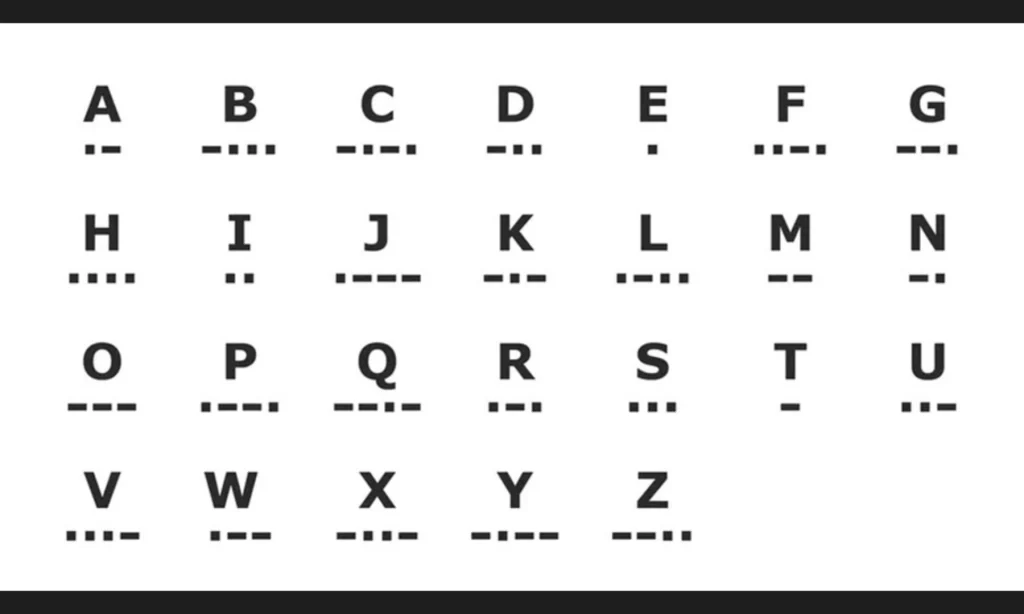
Morse code turns letters, numbers, and punctuation into dots and dashes. It uses short and long signals to represent each character. For example, the letter A is shown as one dot. The universal distress signal, SOS, is represented by three dots. It can be used in various communication platforms because messages can be sent using sound, light, or visual cues.

The beauty of Morse code is that it is simple and universal. Morse code can be read anywhere in the world. Unlike spoken or written languages, it doesn’t require knowledge of grammar or vocabulary. This makes it unique and transcends language barriers. This universal utility is the basis of its further application, even nowadays.

Historical Context: From Telegraphs to Global Adoption

Samuel Morse demonstrated the telegraph system in 1837. Then, in 1844, he sent the famous message, “What hath God wrought,” from Washington, D.C., to Baltimore. The system quickly went global. It became known as International Morse Code. The original American Morse Code is mostly outdated. However, the international version became the universal standard for telegraphic communication.

In the 19th and early 20th centuries, Morse code was vital. It helped in military actions, guided ships, and supported commercial telegraphy. Sea ships used it as a distress signal. Armies used it to coordinate movements over long distances. Morse code was the foundation of fast long-distance communication even before the widespread use of radio.

The Future of Morse Code

Back-up of Emergency Communication.

Morse code will be a dependable backup system of communications in the event of breakdown of modern technology particularly during natural calamities or system failure.

Applications in the Military and Security.

Some of the military will retain the Morse code training as a secure low-tech communication method, interception, and intelligence collection.

Amateur Radio Growth

The world population of HAM radio operators is growing, and Morse code is still one of the essential skills that the enthusiasts rely on in order to communicate over a great distance.

Educational Tool

Morse code will still be available in the schools in training programs to impart pattern recognition, memory and problem solving skills.

Incorporation with the Contemporary Technology

Applications, software, and digital solutions will also transform Morse code to be used as a learning resource, communication tool, and hobby.

Creative and Cultural Uses

The use of Morse code can enhance art, music, fashion, and design as a distinct mode of expression, keeping it cultural.

Modern Uses of Morse Code

Although Morse code might appear to be a thing of the past, it still has certain purposes in modern society.

1. Aviation and Navigation

Morse code is sometimes used by pilots and air traffic controllers as identification signals. Radio beacons and navigational aids still use three-letter identifiers in Morse code. This helps aircraft verify their positions, even without GPS signals. This redundancy acts as a safety net during emergencies or tech failures. Today, Morse code is mainly used in aviation backups and navigation.

2. Maritime Applications

Even ships have not completely given up on Morse code. Even with modern satellite communications, ships at sea can still use Morse. They rely on it for distress signals, identification, and low-bandwidth communication. The global distress signal SOS is universal. This is why Morse skills are a backup of many mariners. It provides the answer to the question: does Morse code remain in use on ships as an emergency backup.

3. Military Communication

The Morse code still has niche applications in some military activities. Many armies use encrypted digital communication now. However, they still teach Morse code to intelligence units and cryptologic specialists. It offers a simple, non-verbal way to send messages when electronic communication fails. Thus, the question is whether the morse code is still used by the military is a resounding yes! Though selectively.

4. Amateur Radio Enthusiasts

The world community of amateur, or HAM, radio operators is perhaps the most avid user of Morse code today. It is practiced by more than 3 million operators all over the world to communicate across continents. It’s a stable, low-bandwidth method. In some cases, it works better than modern digital communication. Fans often wonder: Does the world still use Morse code? It’s thriving among radio hobbyists.

Straight Key

5. Emergency and Rescue Operations

Morse code is valuable in remote areas or during disasters. It works well when traditional systems fail. Essential messages can be sent to rescuers by use of beacons, flashlights, or tapping on metal surfaces. The SOS signal is universal. This means everyone recognizes it, making it a vital life-saving skill, even today with satellites. This is a response to whether Morse code is still used in contemporary emergencies.

Cultural and Educational Significance

In addition to practical uses, Morse code has been the source of artistic, literary, and fashionable uses. Jewellery designers use dot-and-dash patterns to code necklaces with meaningful words. Musicians also explore rhythms based on Morse sequences. It is even introduced in schools to build pattern recognition, memory, and interest in historical communication techniques. Therefore, Morse code remains educational and inspiring, which highlights its timeless relevance.

Fun Facts About Morse Code

  • The distress signals of the Titanic were written in Morse code.
  • The highest Morse operator was Ted McElroy, who sent 75 words per minute.
  • Morse code may be sent through sound, light, tapping, or even blinking.

These illustrations show that while Morse code is no longer used, its impact remains in culture, technology, and education.

Conclusion

Morse code, a dots and dashes language, is not outdated. It is still used as a dependable means of communication in aviation and maritime navigation, military intelligence, amateur radio, and emergency signaling. Its cultural and educational impact also makes it even stronger in contemporary society. So, even though most of the messages are nowadays delivered in real time via digital networks, Morse code still lives silently! A credit to the ingenuity of its designers and its immense adaptability.

Morse code study provides useful insights and a link to history. It appeals to those interested in communication, emergency preparedness, or radio operation. Next time you see flashing lights or hear beeps, think of Morse code. It’s not dead. Instead, it works quietly to bridge the past and the present.

Frequently Asked Questions

What is Morse code?

Morse code is a method of sending messages through the use of a series of dots (·) and dashes (–) to represent letters, numbers, and punctuation. It can be communicated through sound, light, or written messages.

Is Morse code still used?

Yes, Morse code is still used today. Amateur radio operators, the military, and emergency responders rely on it when modern communication fails.

Who invented Morse code?

Samuel Morse invented Morse code in the 1830s with the help of Alfred Vail to use the telegraph to send messages.

How is Morse code transmitted?

It can be transmitted in several forms:

  • Sound: beeps or tones
  • Light: flashing signals
  • Visual: dots and dashes on screens or paper.

Which is the most famous signal of the Morse code?

SOS ( · · — · · ) is the universal distress signal, and it is familiar everywhere in the world.

Does the military still use the Morse code?

Yes, there are military units and intelligence experts who study Morse code as a low-tech and safe way of communication.

Is it easy to learn Morse code?

Yes, one can learn it by practicing. Applications, online tools, and clubs of amateur radio operators make learning easy and fun.

What is the present application of Morse code?

It is used in:

  • Aircraft
  • Maritime navigation
  • Amateur radio
  • Emergency signaling
  • The arts, like music, jewelry, and coding puzzles.

Is Morse code useful today?

Absolutely. It is not internet and electricity-dependent, crosses the language barriers, and is needed in case of emergencies.

How do I start using Morse code?

You can start by learning the alphabet of dots and dashes. Use apps or online courses for training. Also, consider joining amateur radio or Morse code clubs.

Related Blogs

L in Morse Code

L in Morse Code

L in Morse Code: Meaning, History, and Practical Applications Morse code is one of the most fascinating communication systems that...
Read More →